Spain boasts the second-longest high-speed rail network in the world, making it an incredible way to explore the country. From bustling cities to charming towns that are harder to reach by air, Spain’s train system opens up a world of possibilities for tourists.
The system is generally easy to navigate, but just in case you’re unsure about where to start, we’ve got you covered. In this post, we’ll share everything you need to know about travelling by high-speed train in Spain.
Don’t miss our comprehensive video on “Rob on Holiday” that shows you everything you need to know about using high-speed trains in Spain, including tips and tricks for a smooth journey!
Train Services and Routes
Spain offers several high-speed train services, each catering to different needs and budgets:
- AVE: The most extensive and widely used high-speed service, connecting major cities across Spain.
- Avlo: A budget-friendly option that’s a great alternative to AVE for those looking to save money.
- Ouigo: A French low-cost service that has recently started operating in Spain, offering competitive prices.
- Iryo: Another recent addition to the high-speed network, providing additional options for travellers.
Most high-speed train routes begin in either Barcelona or Madrid, which act as central hubs. Here are some of the most popular routes:
- Madrid-Barcelona
- Madrid-Alicante
- Madrid-Granada
- Madrid-Malaga
- Madrid-Seville
- Madrid-Valencia
- Barcelona-Granada
- Barcelona-Malaga
- Barcelona-Seville
- Valencia-Seville
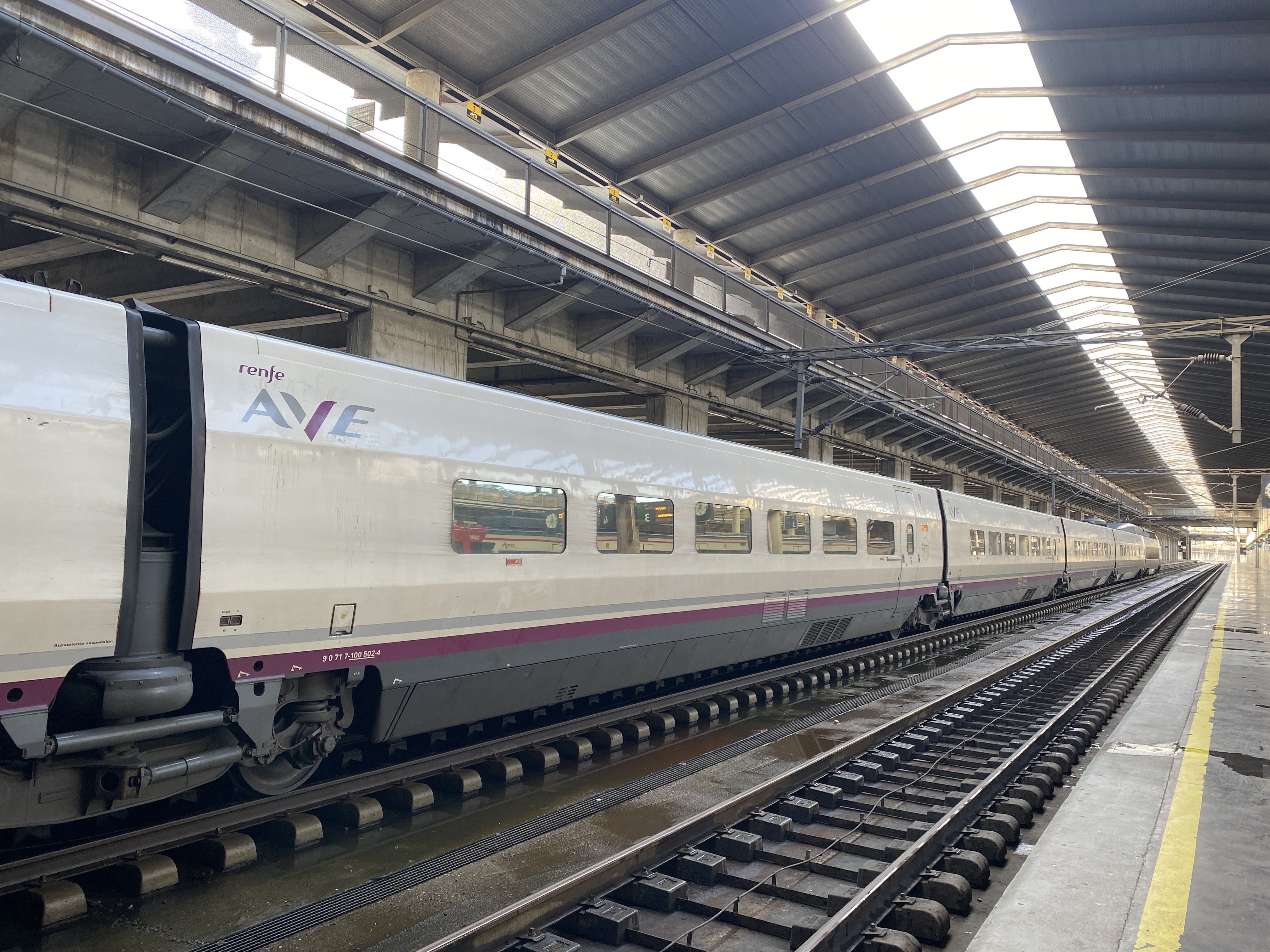
How to Buy Train Tickets
For those booking from the UK, there are two main websites to consider: the Renfe website and Trainline. Trainline allows you to book tickets across all four services, while Renfe only offers tickets for AVE and Avlo. Since we always use AVE, we prefer booking directly through Renfe.
Booking Tips:
- Advance Booking: Aim to book your tickets 2-3 months in advance, especially during popular travel times.
- Passenger Details: When booking your tickets, you’ll need to provide passenger information for all travellers, including a form of ID (a passport is usually required for foreign visitors).
- Seat Selection: For longer journeys, you can pay a small fee to choose your seat, which we recommend for comfort.
- Luggage Allowance: On AVE services, all passengers are allowed to bring up to 3 pieces of luggage on board. The total weight of the luggage must not exceed 25kg.
- Ticket Printing: Print out your tickets and bring them with you on your trip.

What to Do at the Station
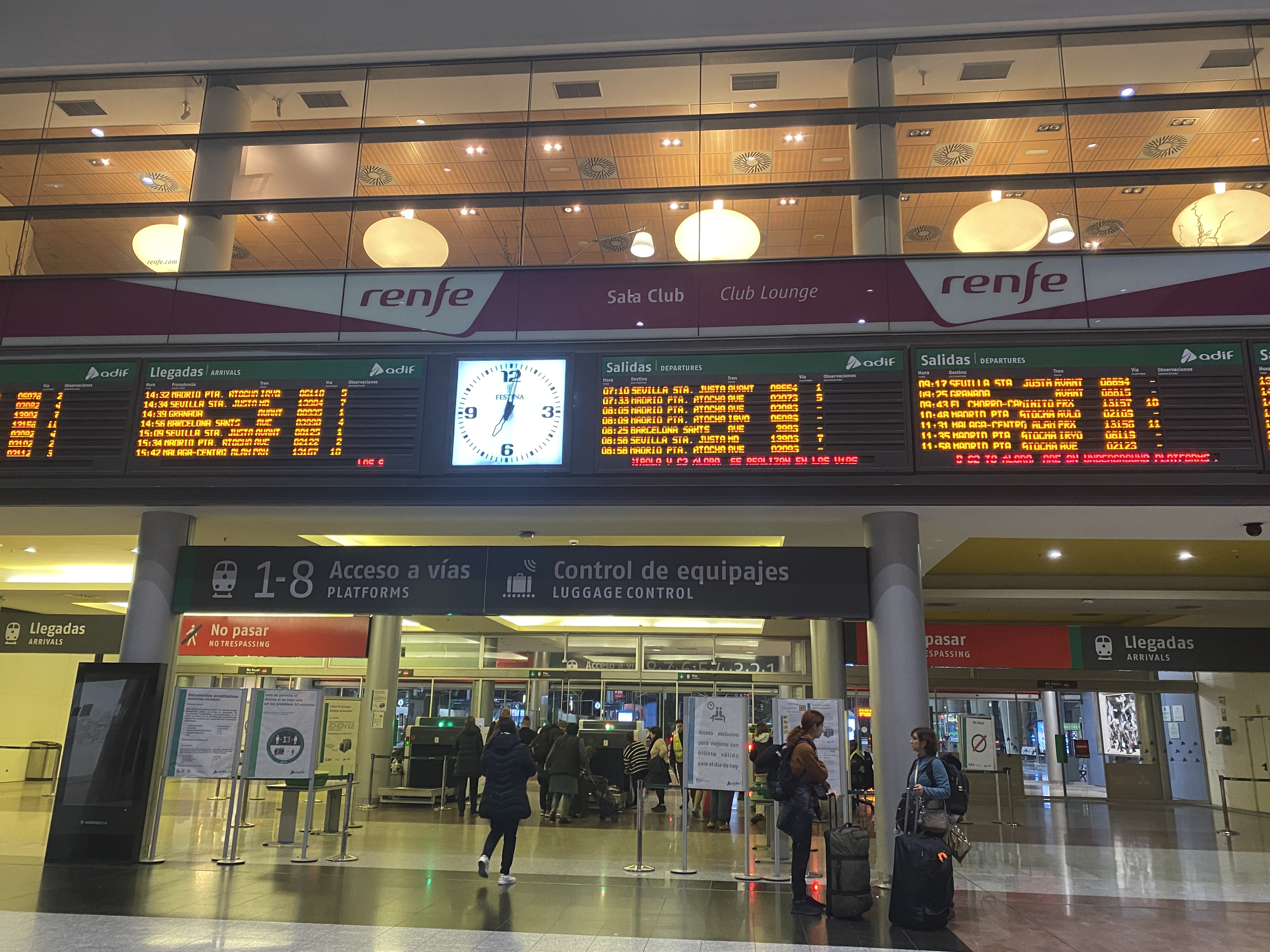
Upon arriving at the station, the first thing you should do is check the departure board. Remember that your destination may not be the final stop on the train’s route. If you’re unsure which train is yours, match the 5-digit number on your ticket with the one on the departure board.
After checking the details, head through security. While this is not as intense as airport security, you will need to put your bags and coats on a conveyor belt and walk through a metal detector. This process is usually quick, but it’s best to allow extra time just in case.
Keep an eye on the departures board after passing through security. Platforms are sometimes announced just 10 minutes before departure, so be ready to move quickly. If your station is the first on the line, the platform might be announced earlier, giving you more time to board.
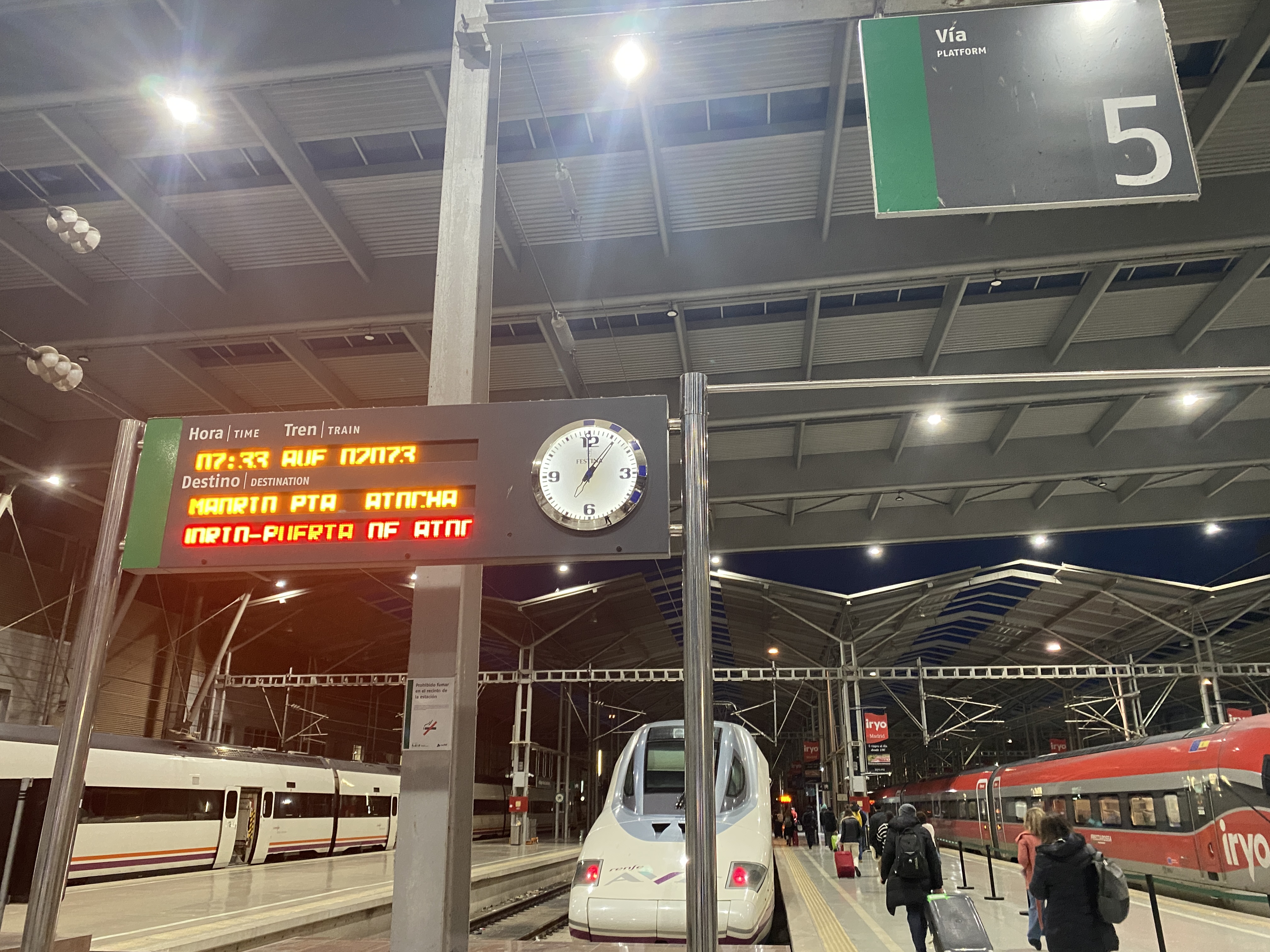
Boarding Your Train
Once your platform has been announced, proceed to the boarding area, where your ticket will be checked. Make sure to board the train at the correct carriage, as some trains have split sections that can’t be accessed from each other once the train departs. And you don’t want to be stuck on the wrong part of the train with no seat!
Larger luggage can be stored in compartments at the end of each carriage, while smaller bags can go above your seat. Arriving at the platform early makes it more likely that you will have space to store your belongings. Of course, the space available also depends on which stop you board along the route.
On Board
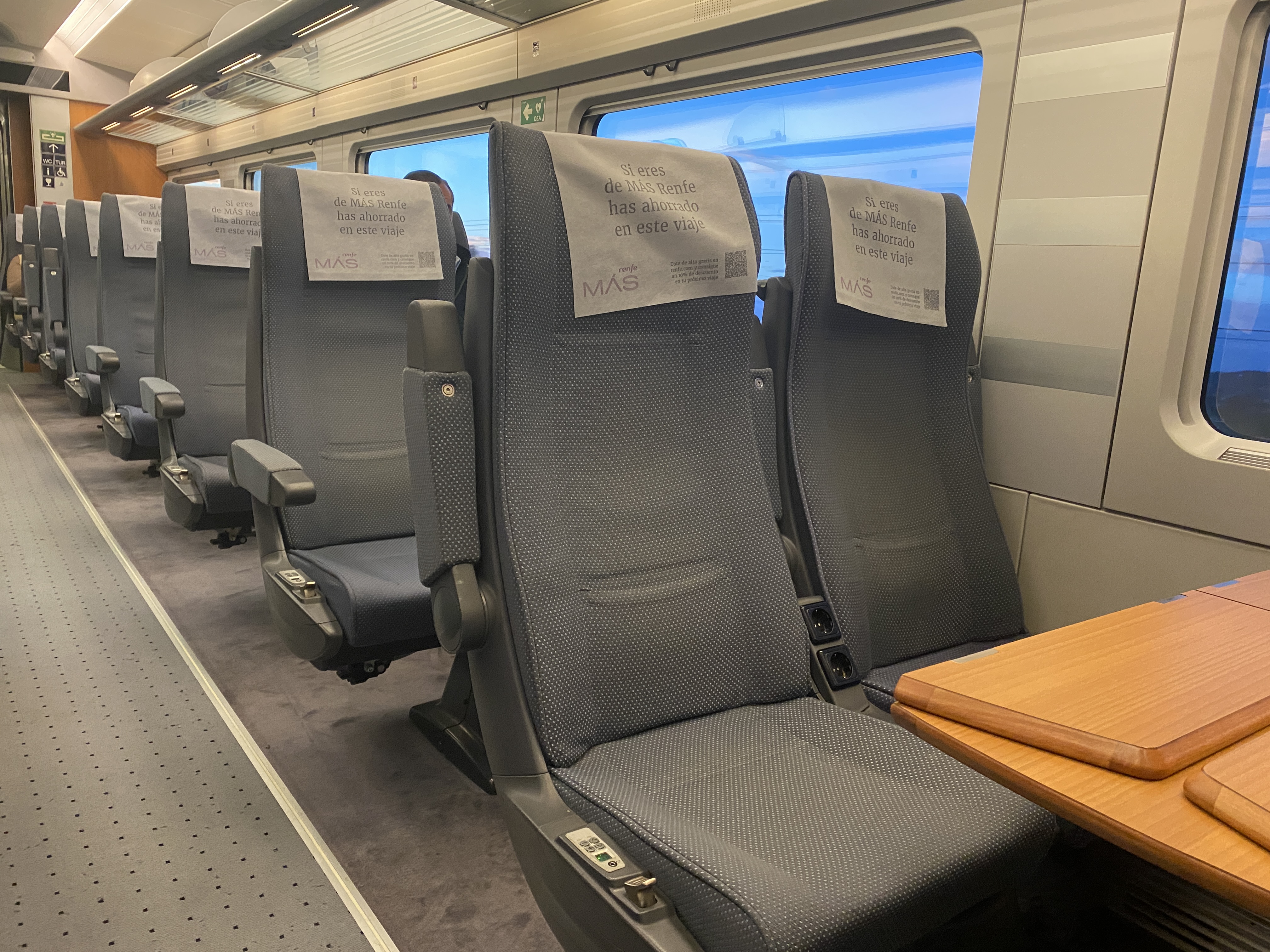
The seats on Spanish high-speed trains are quite comfortable, with many featuring charging ports. Most routes have a buffet car offering a range of snacks and drinks. We’ve only used the buffet service once, but the bacon and cheese baguette we had on our journey to Zaragoza was delicious.
TV screens in each carriage display journey information, including the next stop and the train’s speed. While not all announcements are made in English, these screens help keep you informed about your journey.
Review
We can’t recommend Spain’s high-speed trains enough. They are usually on time, very clean, and comfortable, offering stunning views of the Spanish countryside along the way. It’s a fantastic way to travel, especially to cities like Zaragoza and Córdoba, which aren’t easily accessible by plane from the UK. For us, these trains have opened up so many travel opportunities, making each journey a memorable part of our adventure.

Thanks for reading our Ultimate Guide to High-Speed Train Travel in Spain! If you have any questions about travelling by train in Spain, feel free to leave a comment below. If you enjoyed this post, please like it and follow our blog for more travel tips. Don’t forget to subscribe to our YouTube channel, “Rob on Holiday,” for even more vlogs and travel advice. Happy travels!
 Rob on Holiday
Leave a comment